
Shopping Cart
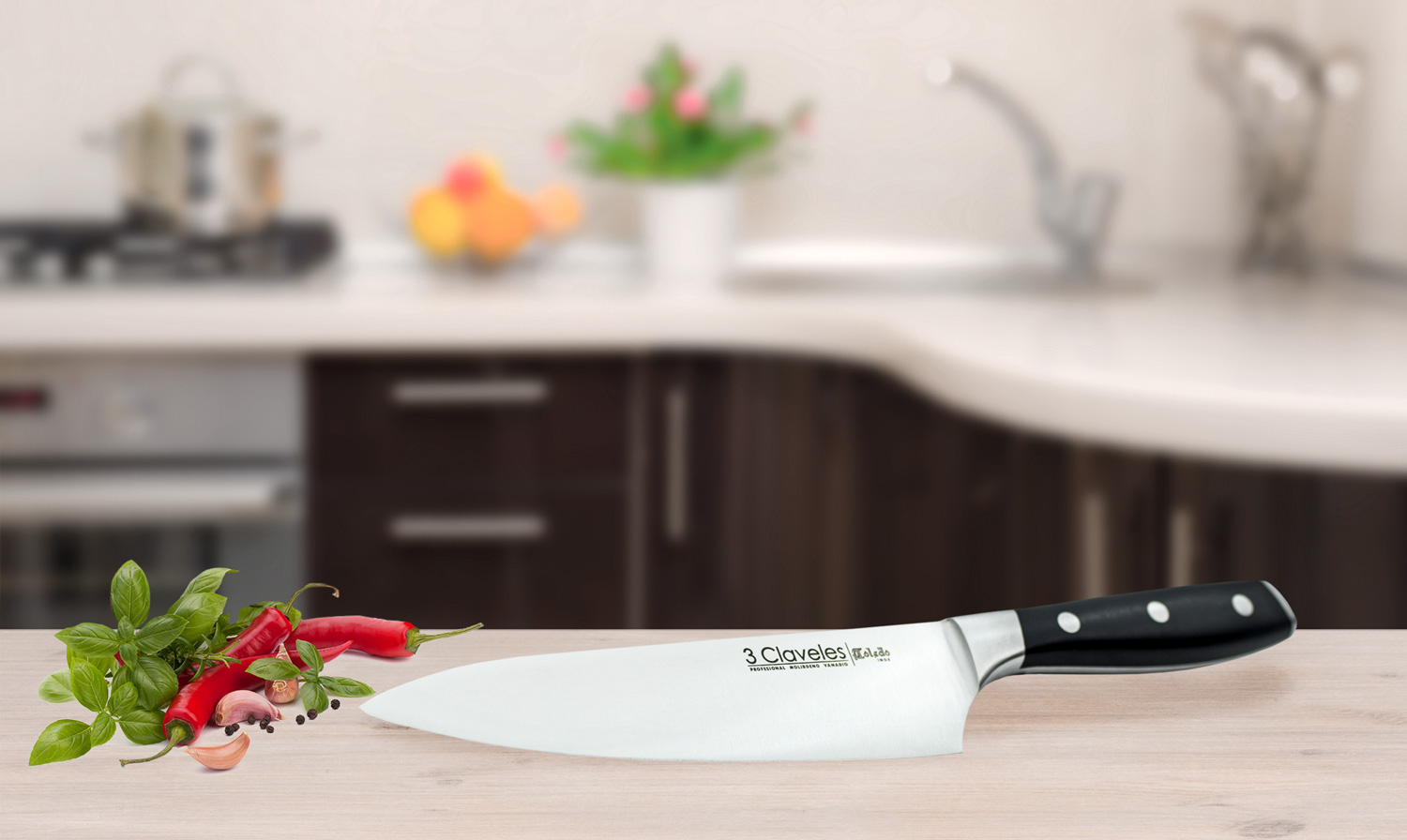
Depending on the type of food you want to prepare, a different type of blade is recommended.
- The straight blade allows a clean cut. It can be used to cut soft and semi-hard meals, delicate cuts and also to peel and to decorate.
- The serrated blade allows cutting meals with a rigid exterior and a soft interior.
- The honeycombed blade facilitates the cutting of salmon and ham by creating an air gap between the blade and the meal. It avoids that the food remains adhered to the blade, allowing the cut of very thin slices.
Another point to take into account in the leaves of the knives is the type of tip. It is important to select most suitable one depending to the meal you want to prepare.
- Tip on the back: the back of the blade is straight and the edge is curved, allowing the swing on the tip over the cutting surface.
- Center point, the back of the knife and the edge are slightly curved and tipped. It is useful for macerating meat, drilling, etc.
- Tip on the edge, the back of the blade is downward curved at its tip and the edge go straight up to the tip of the blade. It is very useful to make a cut without rolling movements on a surface.
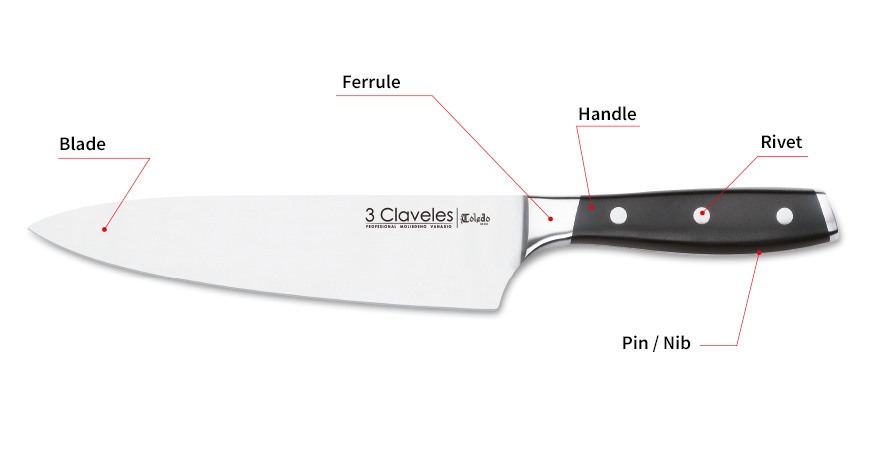
The handle has to be ergonomic. The perfect balance between the blade and the handle is needed for a better comfort and safety.
A good grip and a good combination between the smooth handling and a precise cut improve the kitchen work, increasing the productivity and avoiding overload in the joints.
The ferrule is the integral part of the blade which provides the perfect weight and a good balance between the blade and the handle.
The assembling of the knife blade with the highest quality handle is the one in which the tang is extended throughout the entire handle.
The spike or nerve attaches permanently to the handle with rivets.