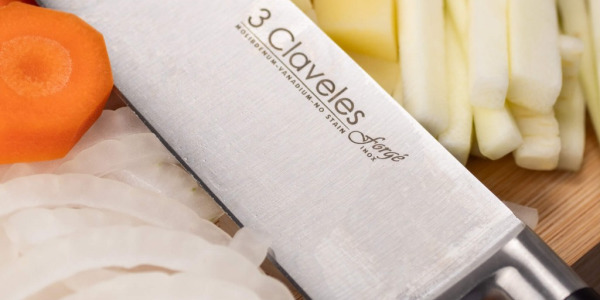
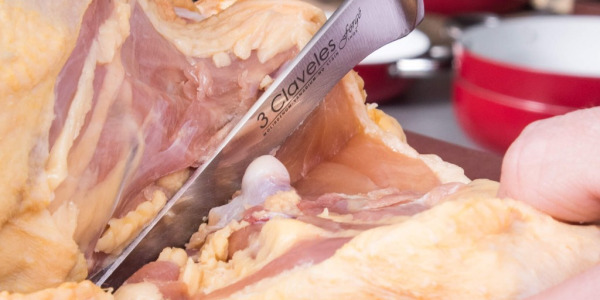
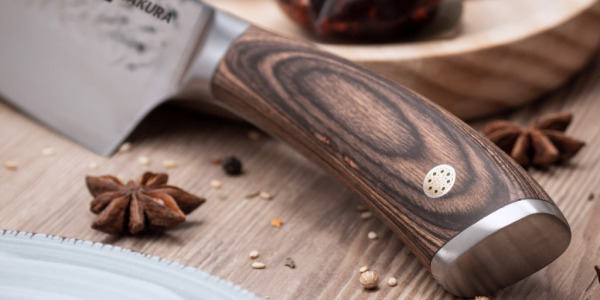
Knives
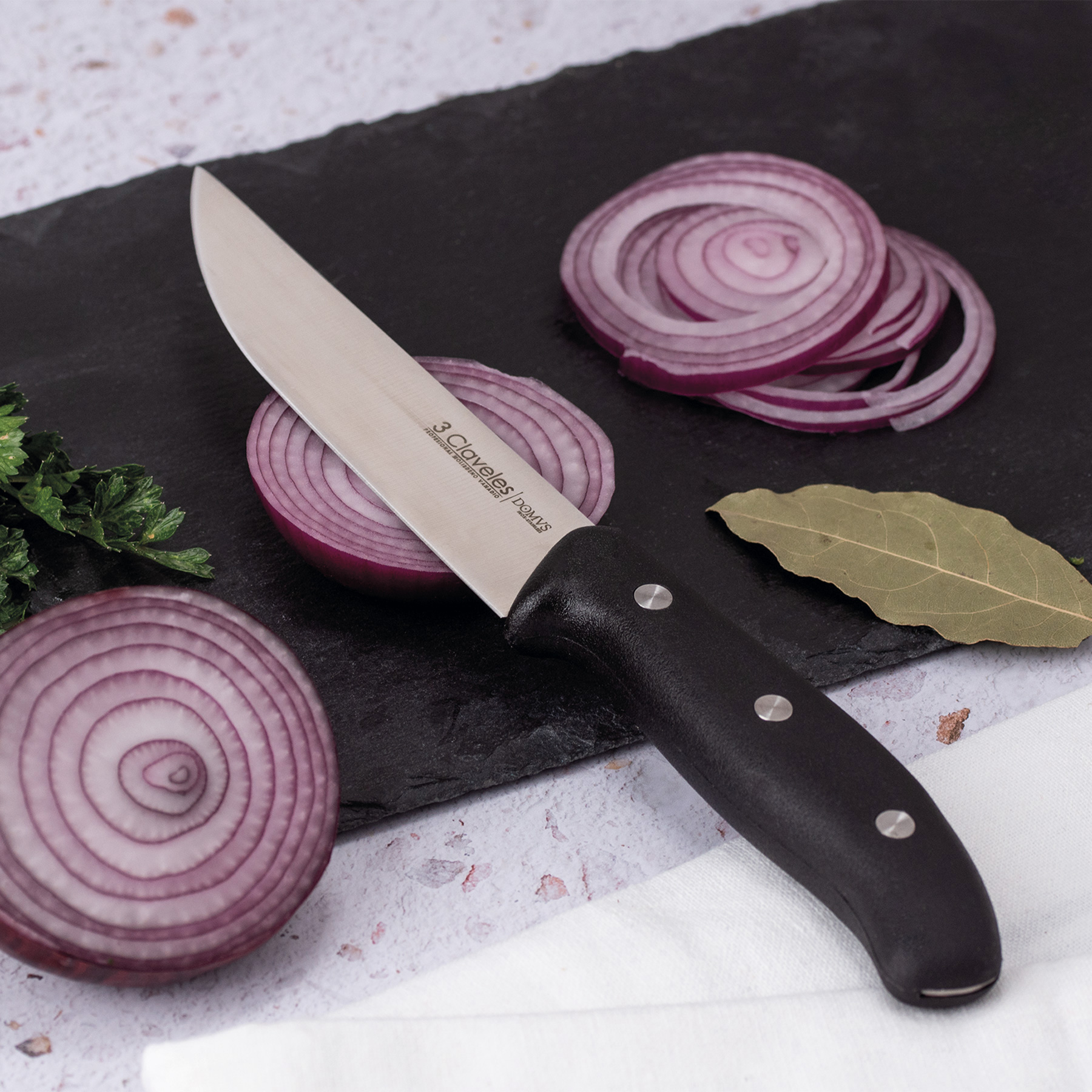
The right tool for every cut. Choose the perfect balance between steel, ergonomics, and blade type to work with precision and safety in your kitchen.
What sort of knife do I need?
Take the quiz!
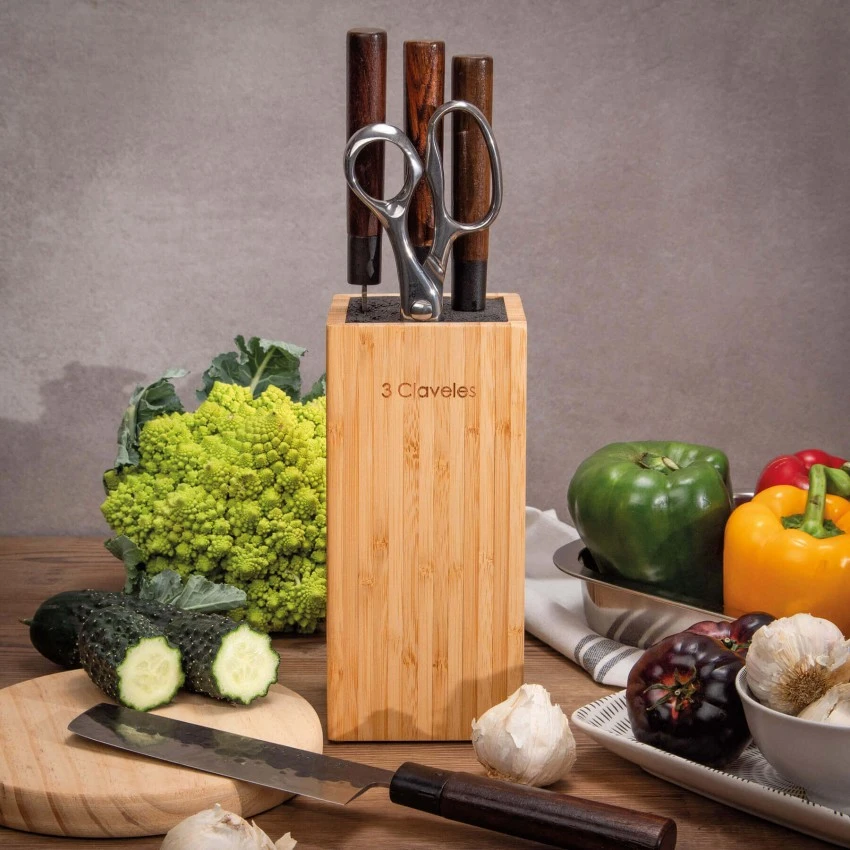
Create your own knife block
Most-sellers
All knives
Industrial Knives
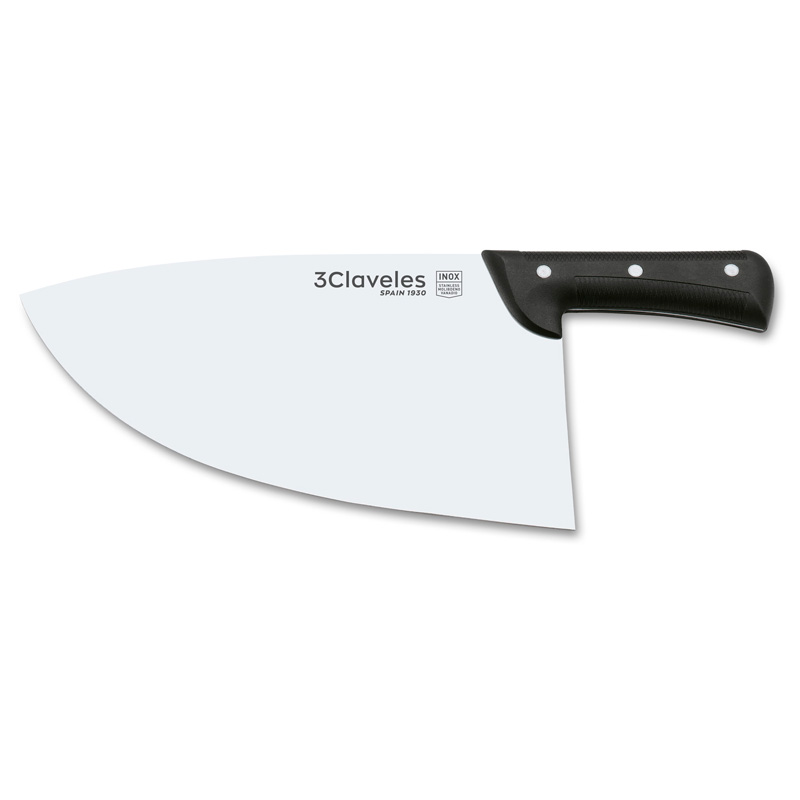
High-resistance tools designed to withstand intensive shifts in deboning rooms, butcher shops, and food environments. Ergonomic and non-slip handles guarantee maximum safety and hygiene in every cut.


The new Cook collection
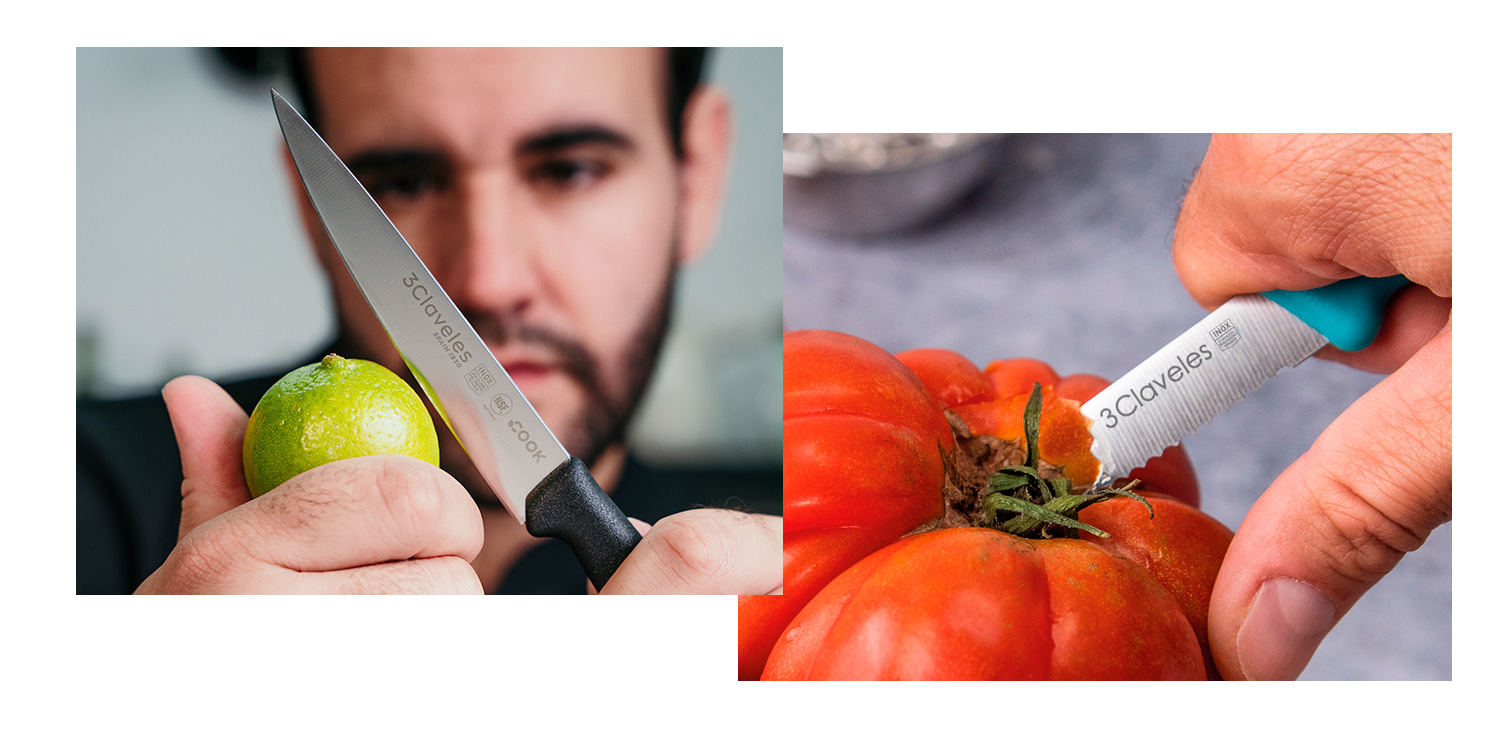
The collection designed for food enthusiasts seeking professional-grade performance. Lightweight knives featuring high-precision sharpness and vibrant, color-coded polypropylene handles.


Knife Collections
Looking for a seamless kitchen setup? Discover the 3Claveles collections and meet all your culinary needs with a unified style.

The difference between cutting and mastering the cut.
Professional performance for kitchen enthusiasts
Whether in haute cuisine or at home, a precise cut completely transforms a dish.
At 3Claveles, we develop our knife series to meet the demands of both chefs and the most meticulous amateurs.
We combine the high resistance of steel with an ergonomic design that reduces hand fatigue, allowing absolute control and a clean glide through every ingredient.

Knife Sets
Knife Care & Insights
Discover more from 3Claveles
FAQs
How can I tell if a knife is of good quality?
You can verify it through 3 key factors from the first use:
Pressure-free cutting: When working on the cutting board, the knife should glide through difficult foods (like tomato or pepper skin) smoothly and by the blade's own weight, without you having to squash or force it down.
Balance in hand: When gripping it, the weight between the blade and the handle must feel completely balanced. If the knife is front-heavy or too heavy at the back, it will force your wrist and cause fatigue.
Edge retention: Good steel keeps its cutting structure stable for a long time and reacts immediately to a sharpening steel (honing rod). If you notice the knife loses its edge completely after a couple of normal uses and needs constant sharpening, the steel is soft and of low quality.
What is the difference between a forged and a stamped knife?
It is a matter of robustness versus lightness.
The forged knife is manufactured from a single piece of solid steel; it is a more consistent, firm knife with more weight in the hand.
The stamped knife is cut from a sheet of steel, resulting in a lighter, more flexible, and highly agile tool for daily use.
What type of steel is best for a kitchen knife?
For daily use, the best material is high-carbon stainless steel (such as the Molybdenum Vanadium alloys we use at 3Claveles).
This type of steel offers the perfect balance for the kitchen: it is hard enough to maintain an excellent edge for a long time, yet retains the necessary flexibility to prevent chipping upon impact, and resists corrosion from water and food acids longer.
How do I choose the right knife for each ingredient?
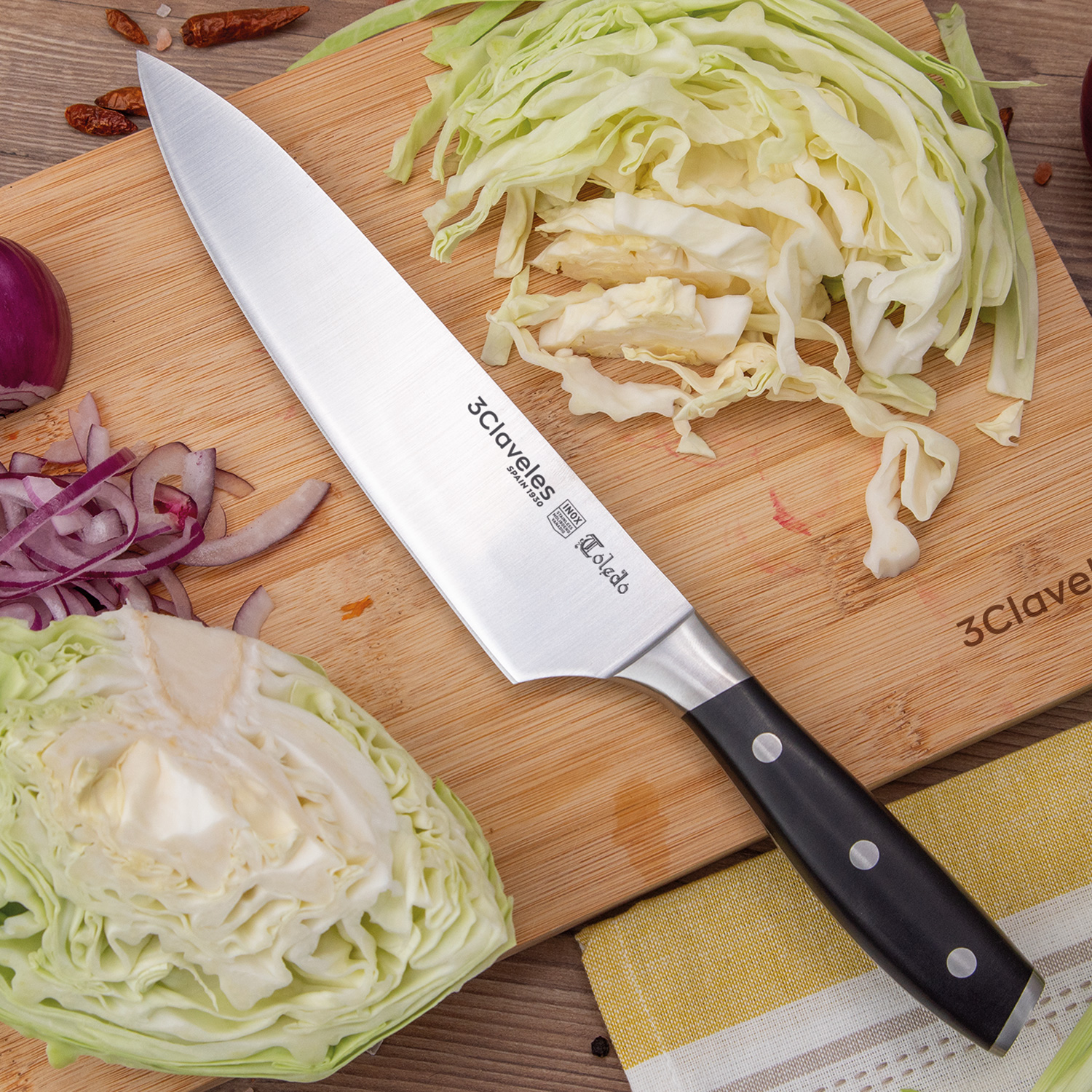
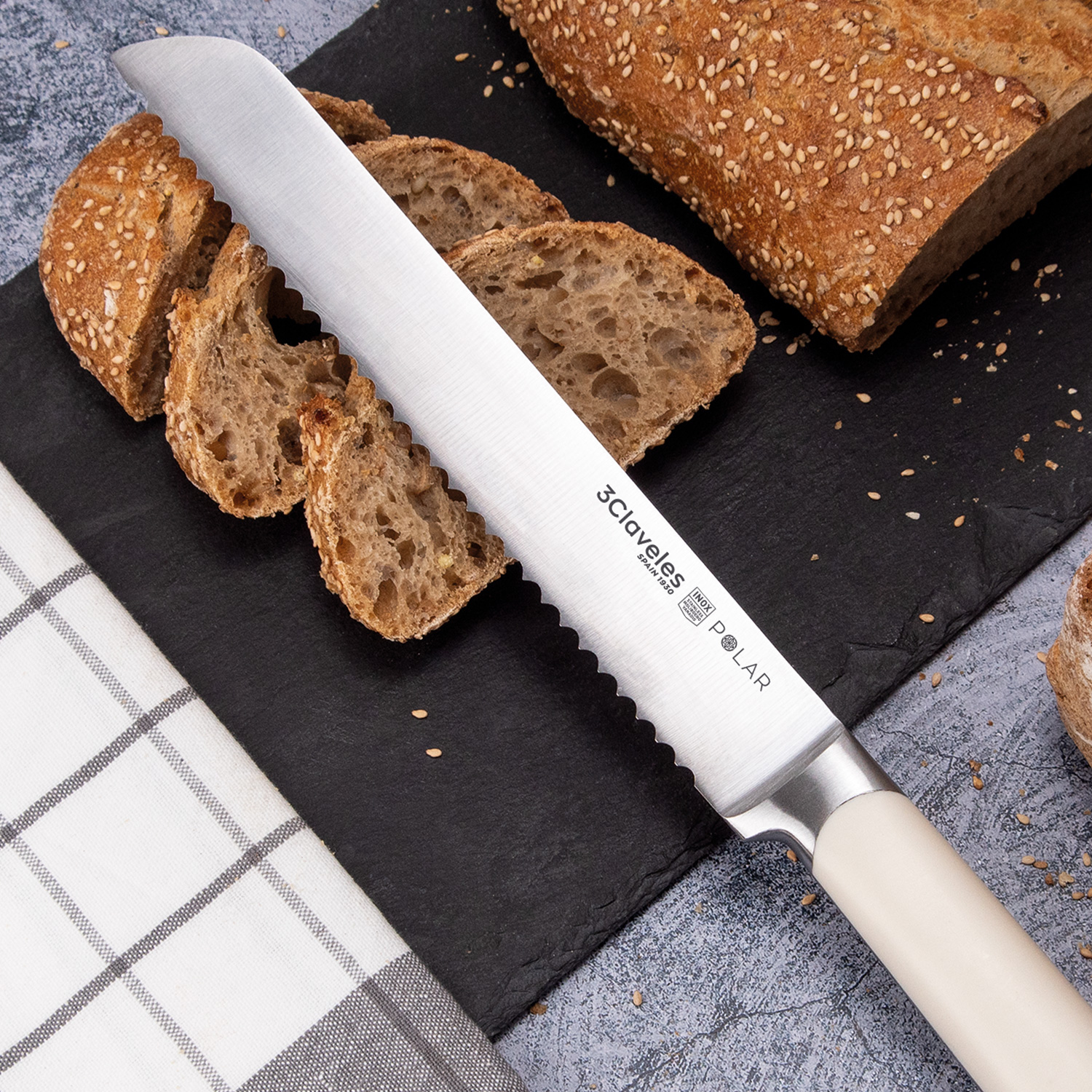
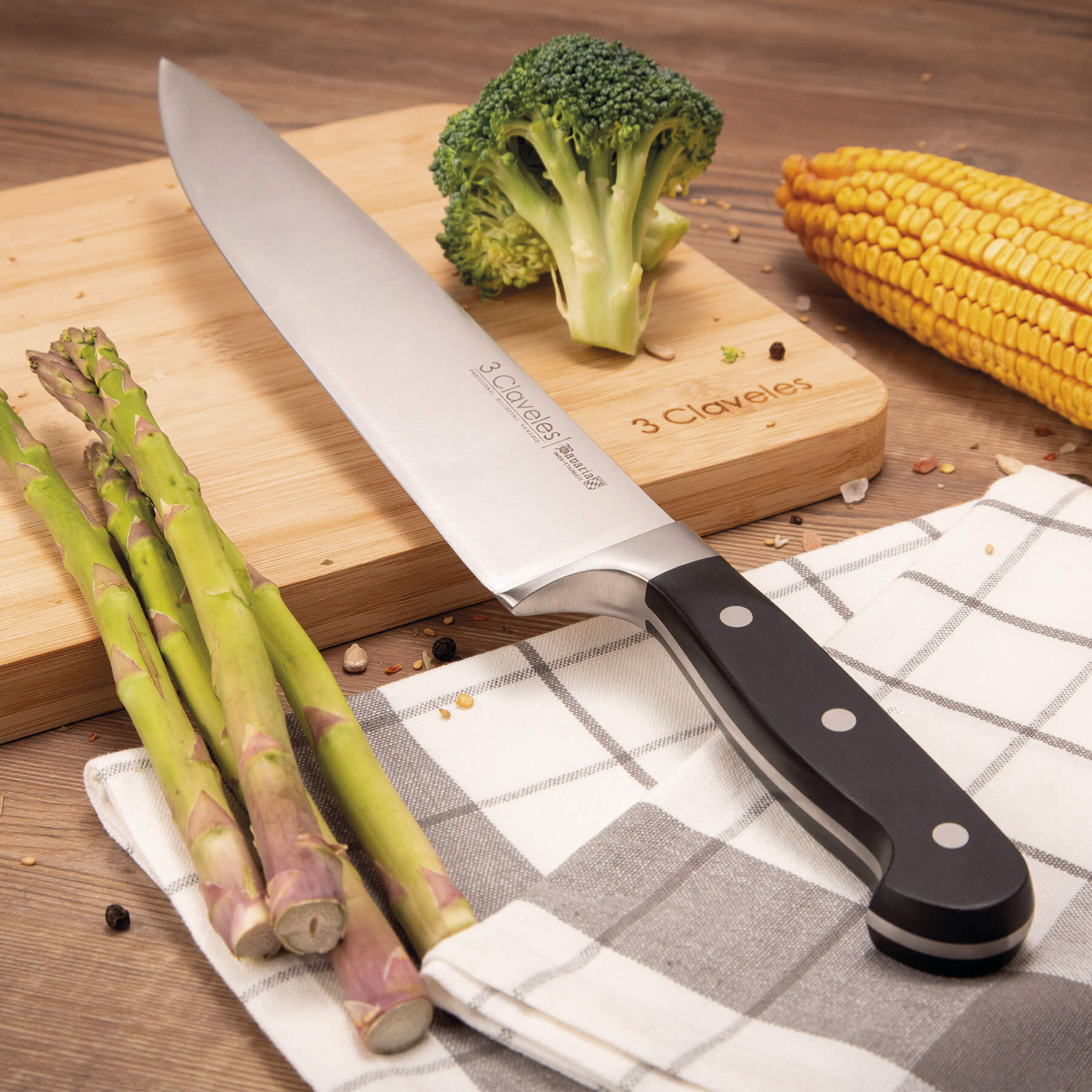
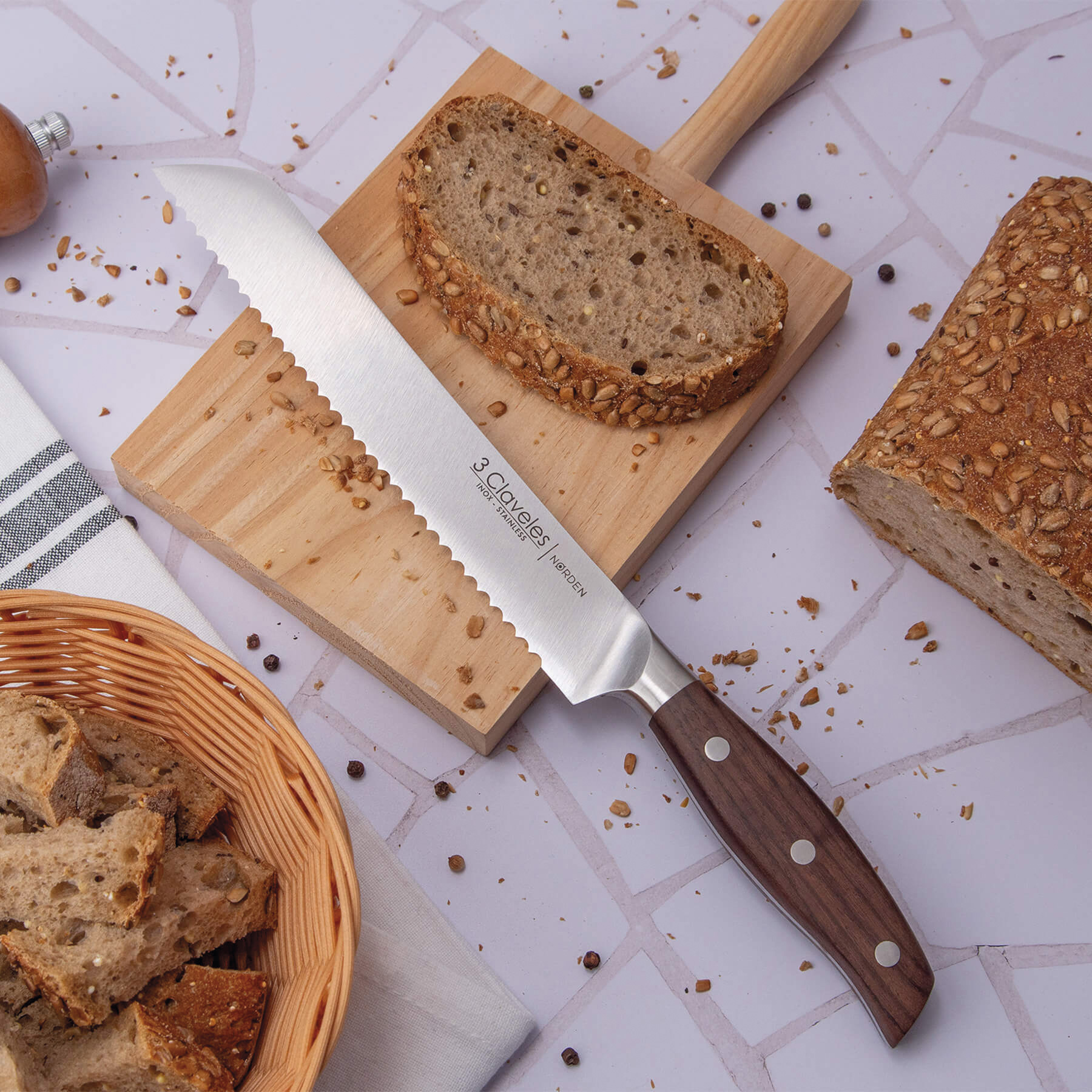
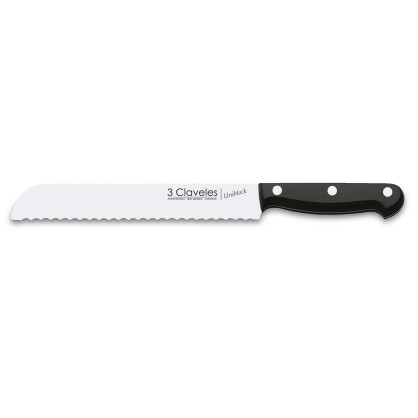
The basic rule is to adapt the size and shape of the blade to the type of food: large, wide blades (chef type) are for chopping dense ingredients on a board; thin, flexible blades are for profiling meat or fish; and serrated edges are for hard crusts.
Since each technique requires a specific tool, an interactive cutting test is available on our website where you can select what you usually cook so we can recommend the exact option you need.
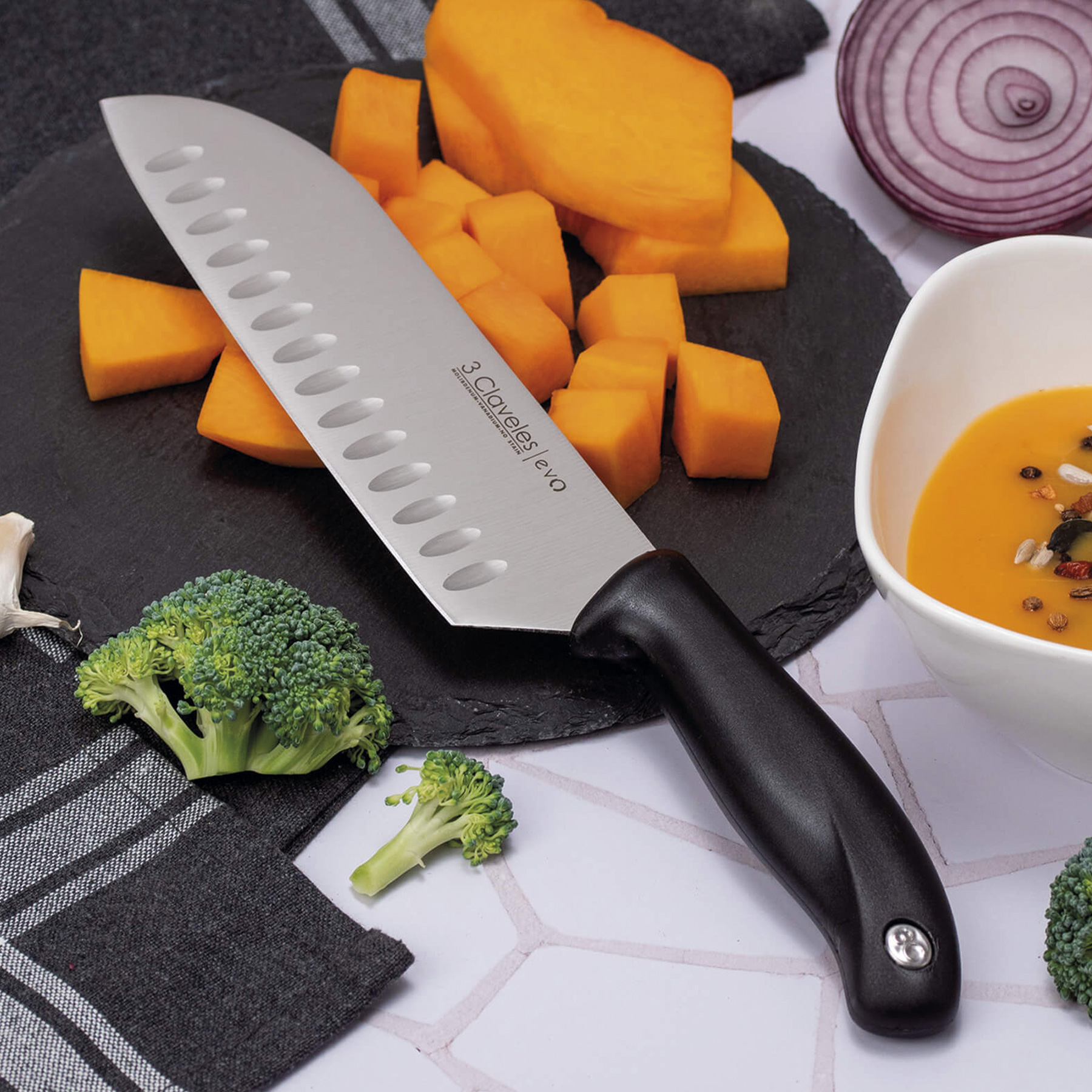
What is a Santoku knife and what is it used for?
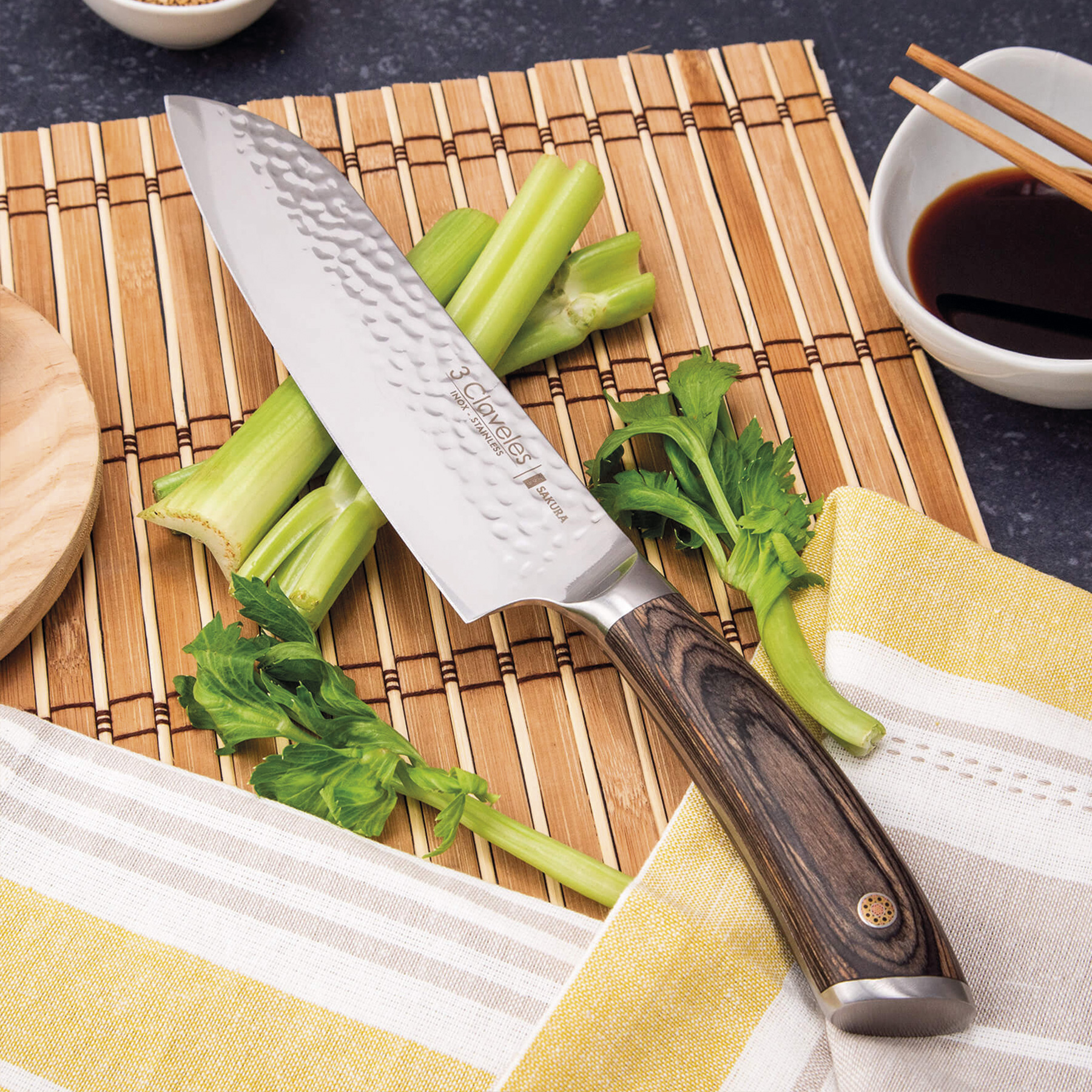
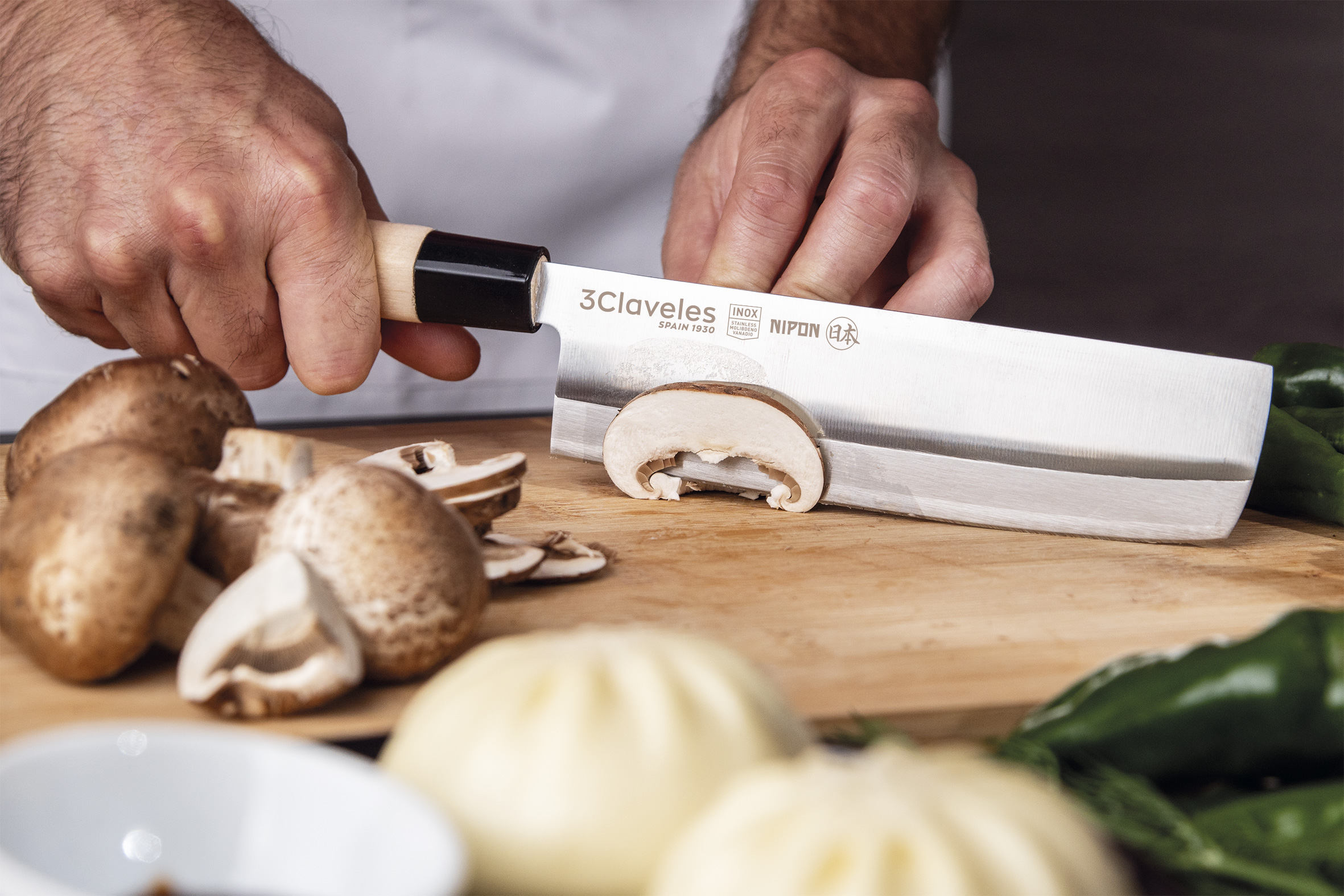
The Santoku is the Japanese equivalent of the Western chef's knife.
Its name means "three virtues" because it is designed for three main functions: slicing, dicing, and mincing meat, fish, and vegetables.
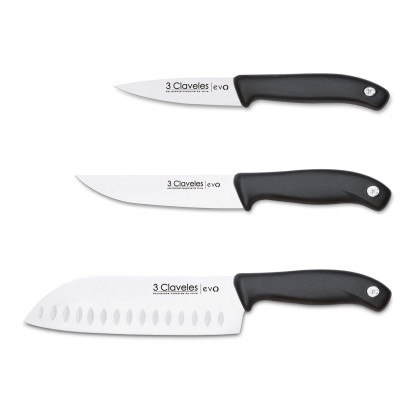
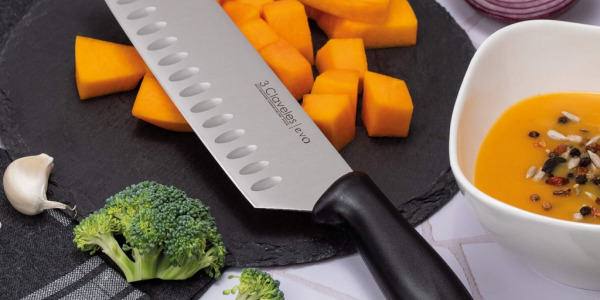
It features a straighter blade and granton edges (scallops) on the side that create air bubbles when cutting, preventing wet or thin foods (like potato or zucchini slices) from sticking to the steel.
What are the characteristics of 3 Claveles knives?
3 Claveles knives stand out for their balance between design, functionality, and high-quality materials. Here are some of their key features:
- Professional durability: Blades made of stainless steel or high-quality forged steel provide long-lasting sharpness and resistance.
- Ergonomic handle: Designed to fit every hand, reduce fatigue during cutting, and ensure precise cuts.
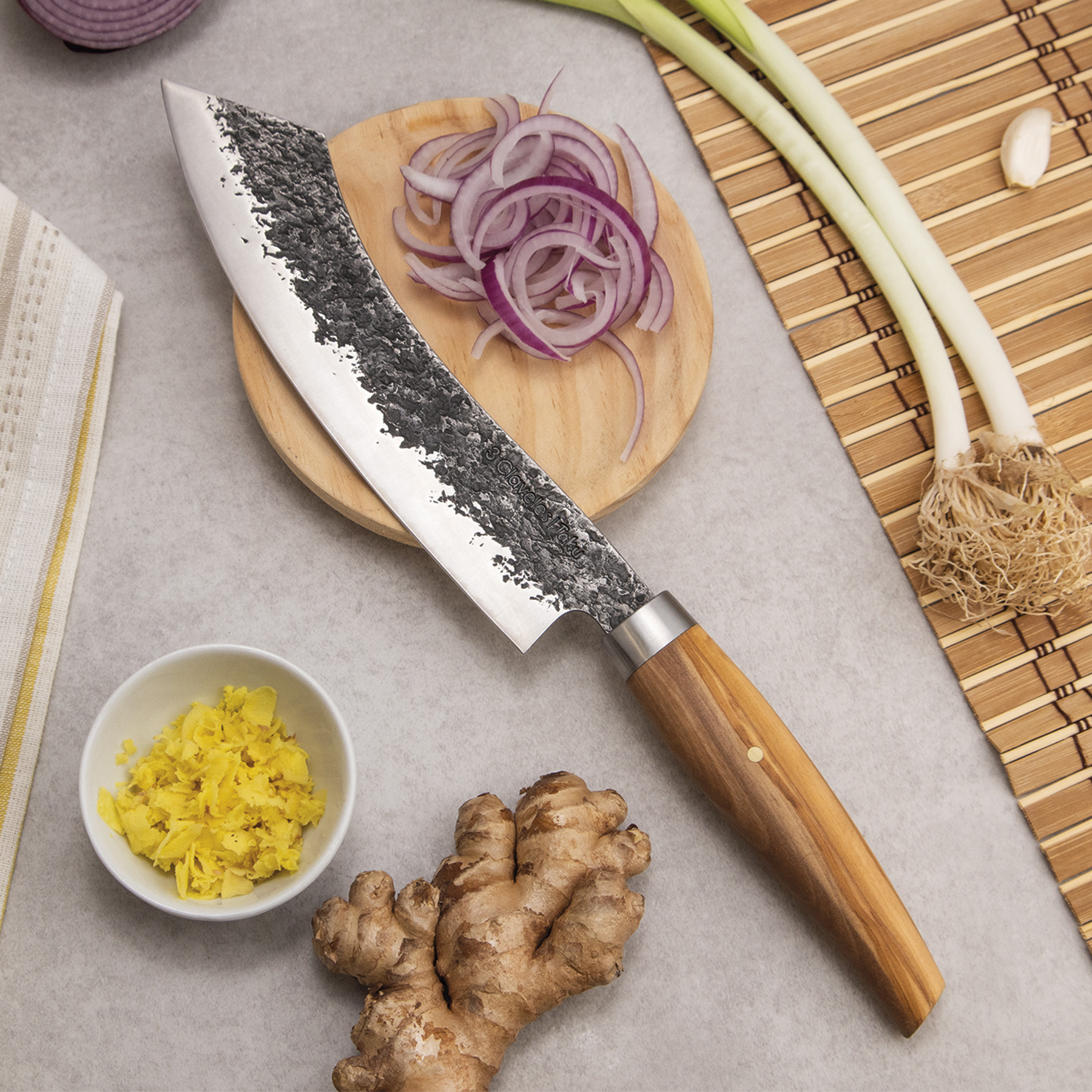
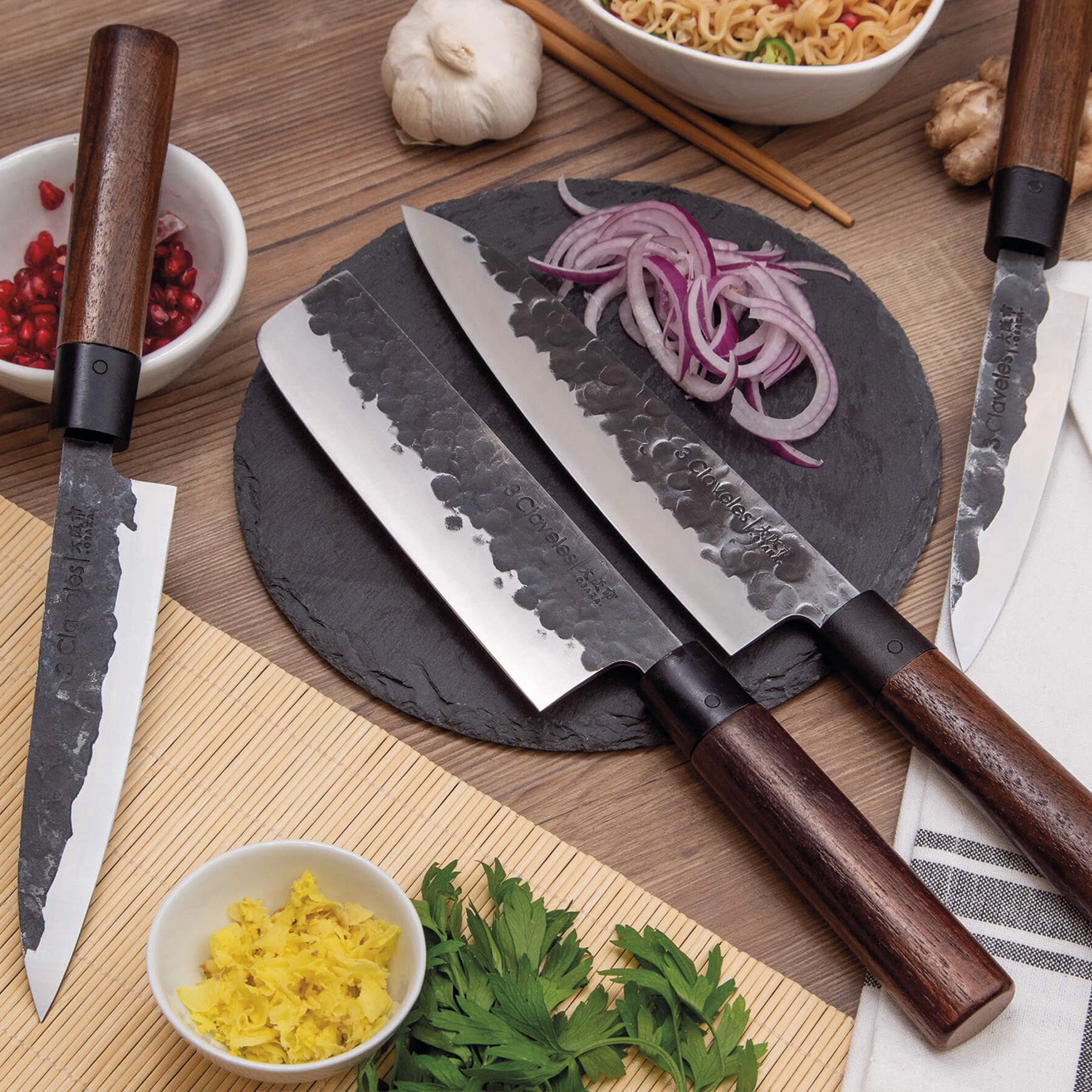
- Hand-forged: Ranges such as Osaka or Taku feature unique hand-forged blades with a hammered finish.
- Moisture resistance: Handles made of polyoxymethylene (POM), polypropylene, oak wood, or pakkawood offer high resistance to heat and moisture.
- Antibacterial technology: The Proflex-Microban handle ensures maximum hygiene and safety during use.
What is the price of 3 Claveles knives?
The price of 3 Claveles knives may vary depending on several factors, such as the type of knife, manufacturing materials, intended use, or purchase format. Within our catalogue, you can find everything from basic knives for everyday use to more specialized models designed for specific kitchen tasks.
What are the reviews of 3 Claveles knives?
Reviews of 3 Claveles knives highlight their quality, durability, and cutting precision. Many users especially value their strong blades, design, and good balance, both for home use and professional kitchen environments.
How to choose the right knife according to its use?
Choosing the right knife for its intended use is essential for precise cutting. 3 Claveles knife blades are designed to adapt to different types of food and cutting techniques.
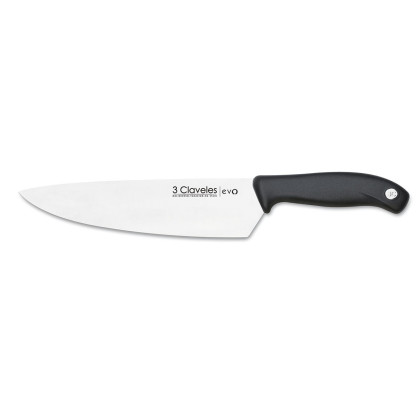
- For general tasks, chef’s knives are the most versatile, allowing easy cutting of meat, fish, and vegetables.
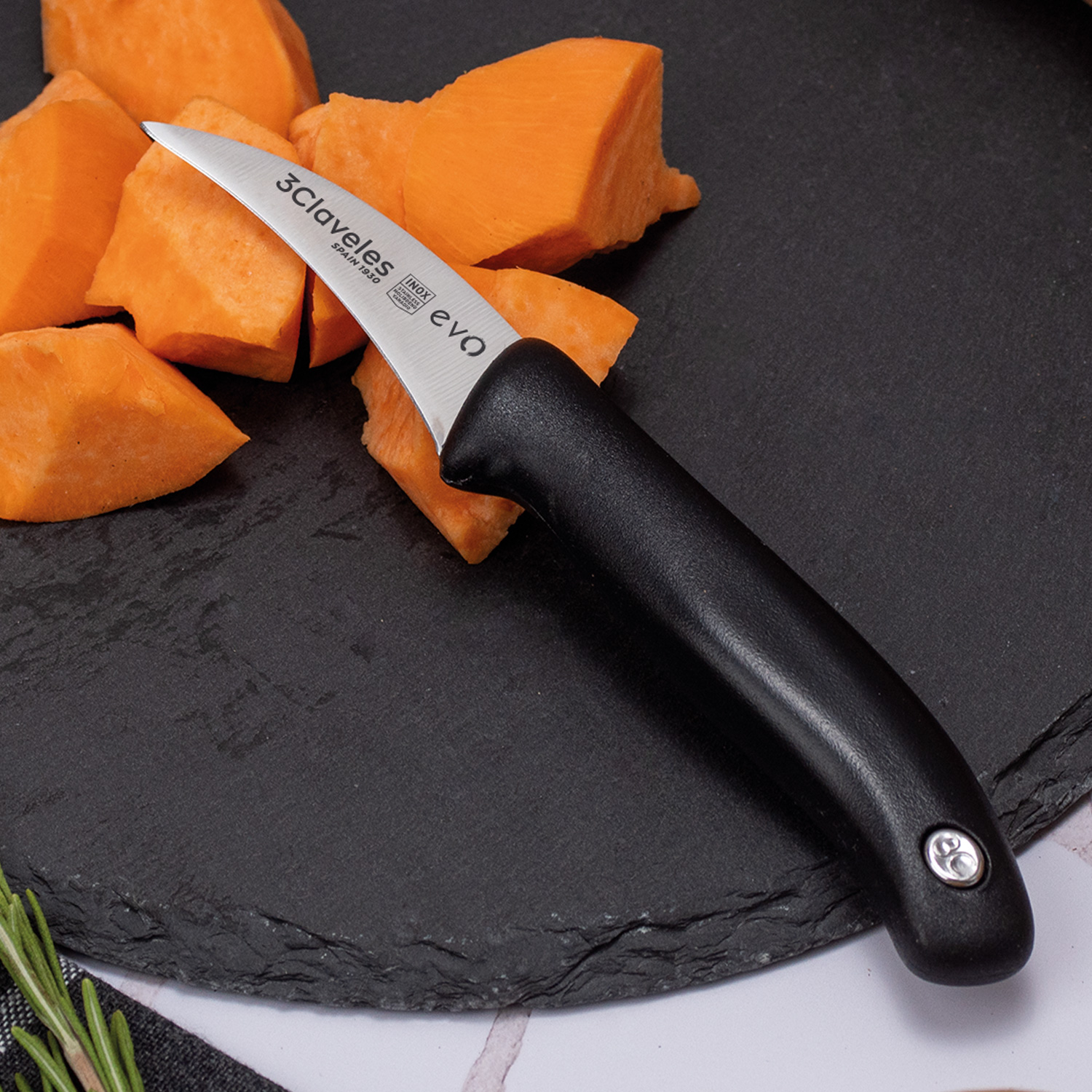
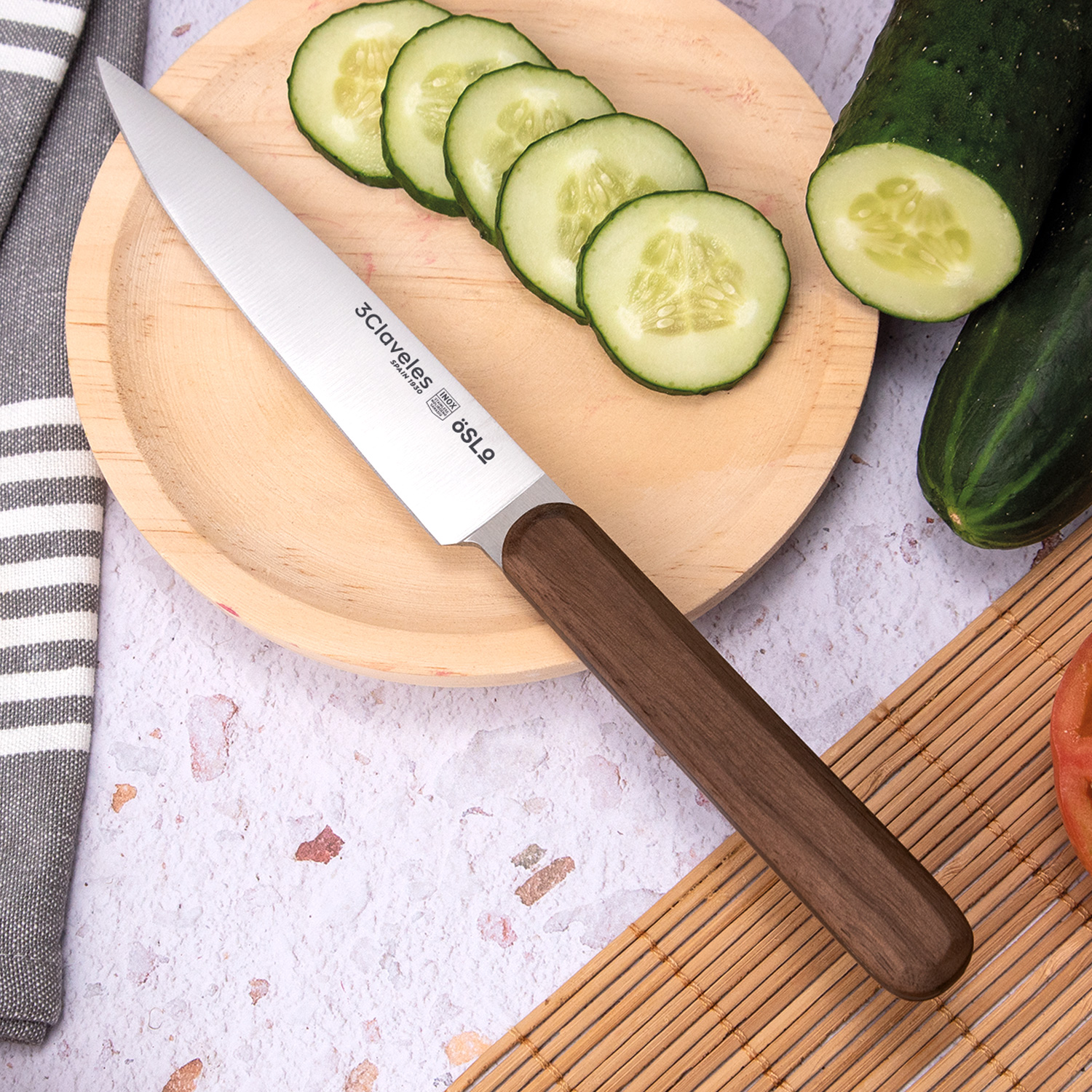
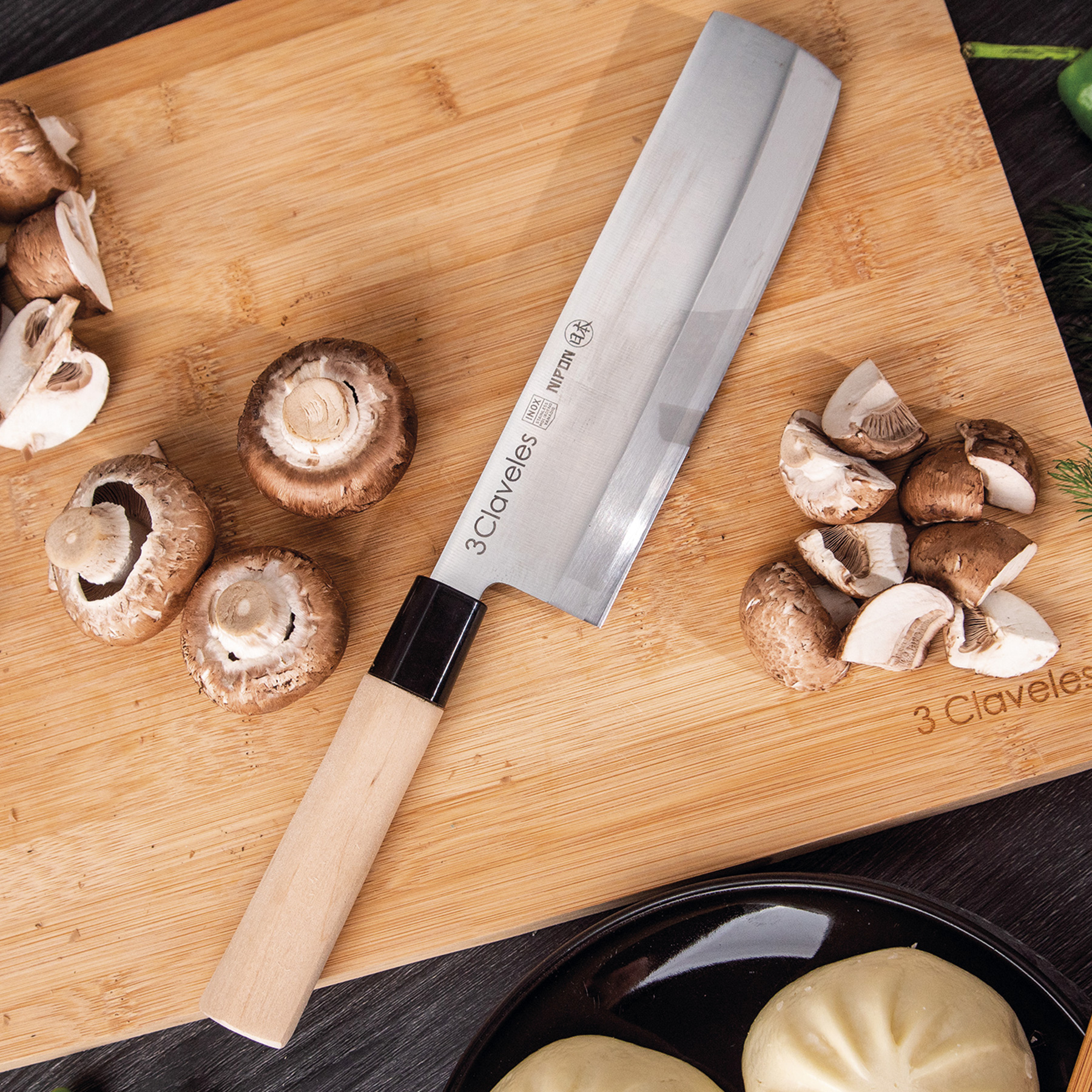
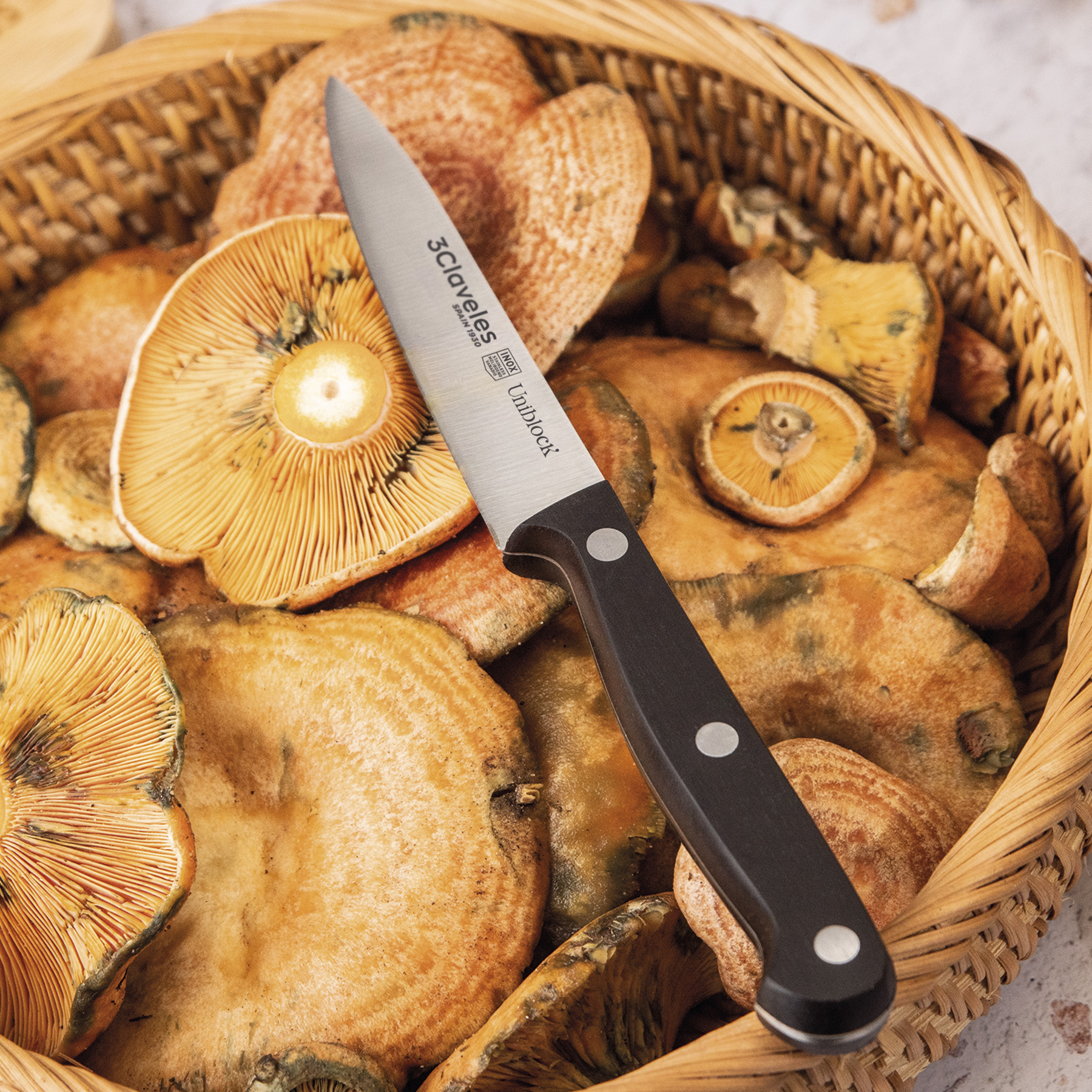
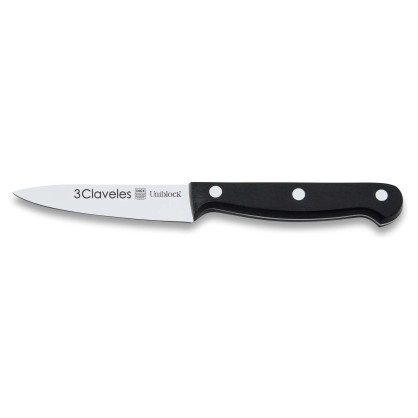
- For more precise work, such as peeling or preparing fruits and vegetables, paring knives or vegetable knives are recommended.
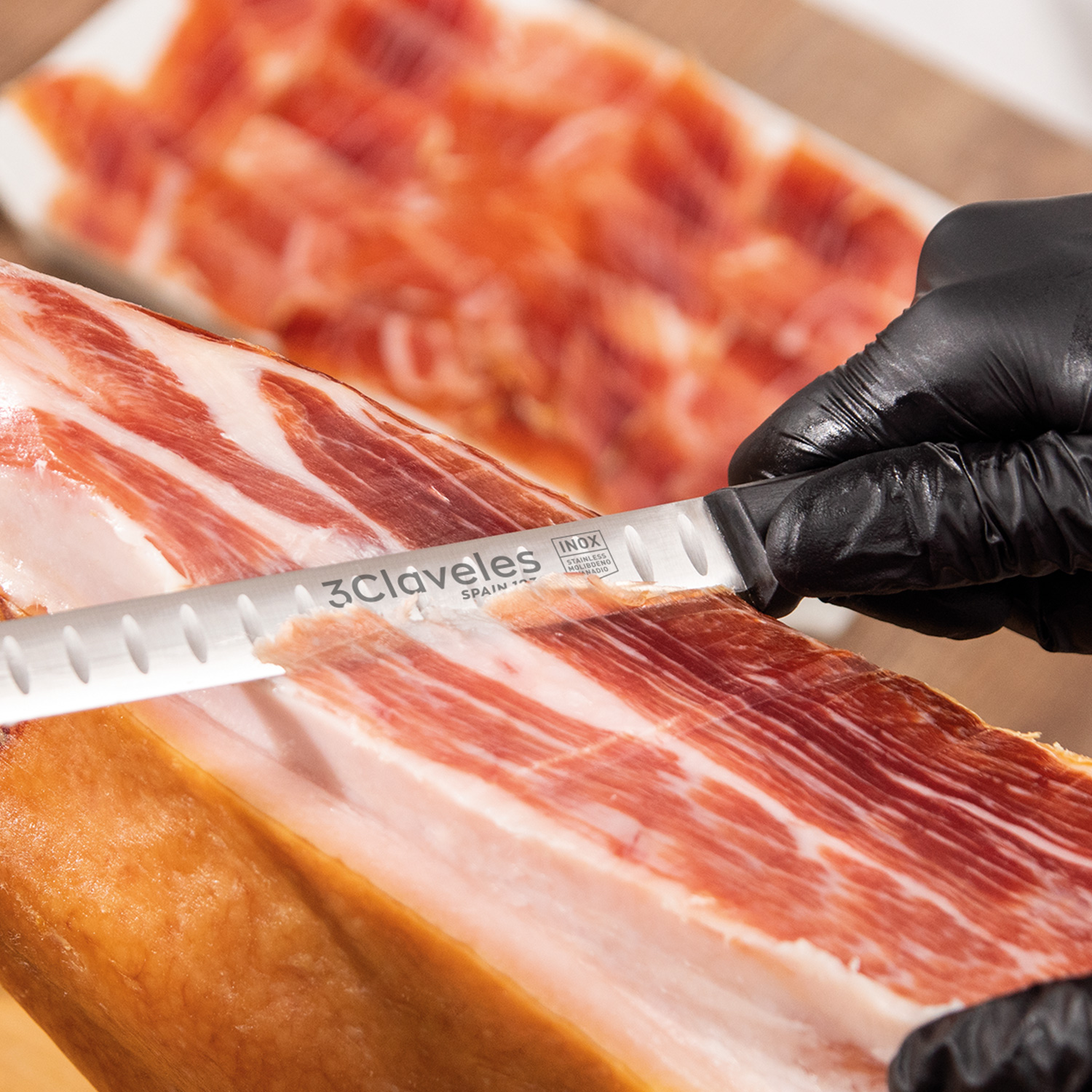
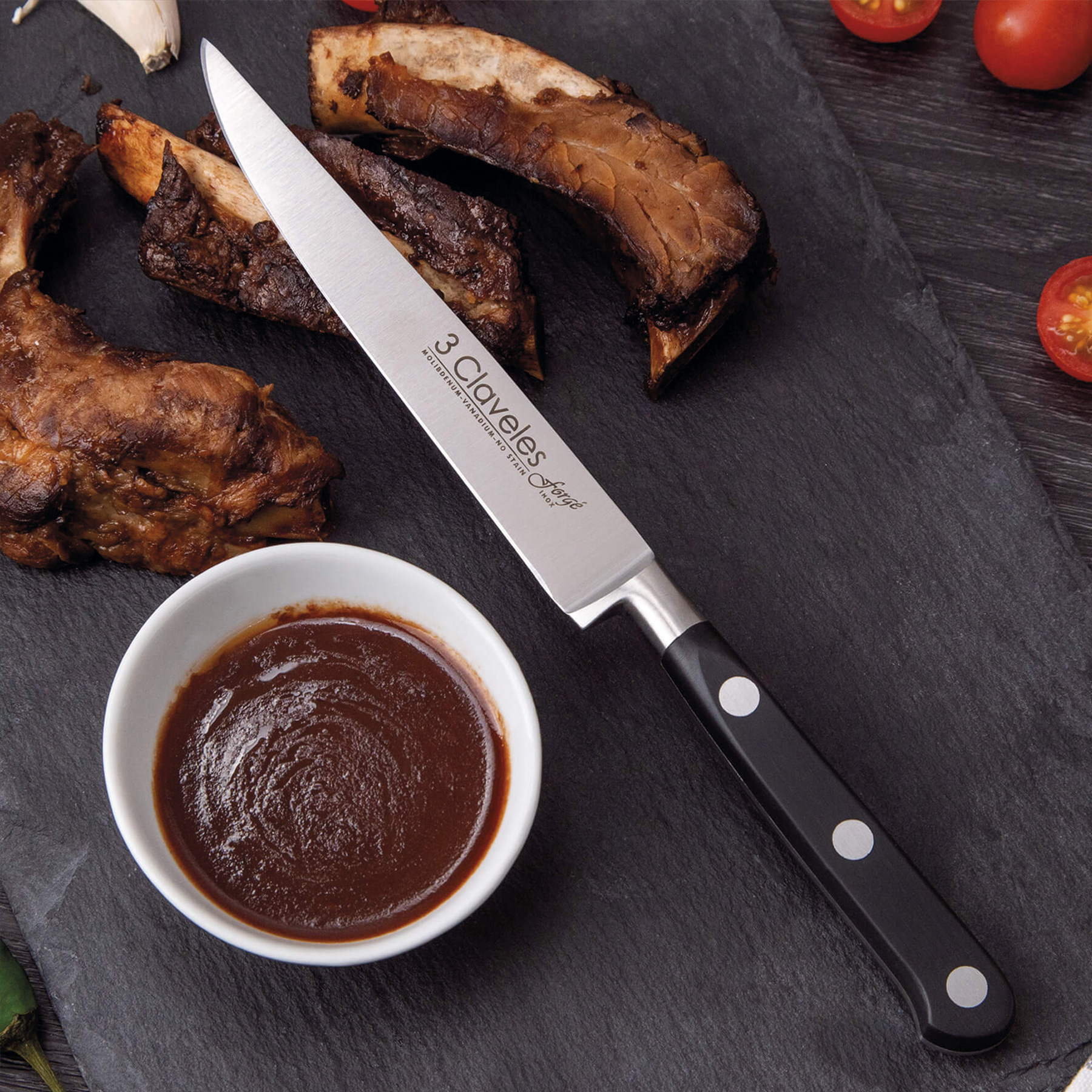
- For meat and fish, there are more specific models such as slicing knives, boning knives, or carving knives, while ham and salmon knives are designed to obtain thin, even slices.
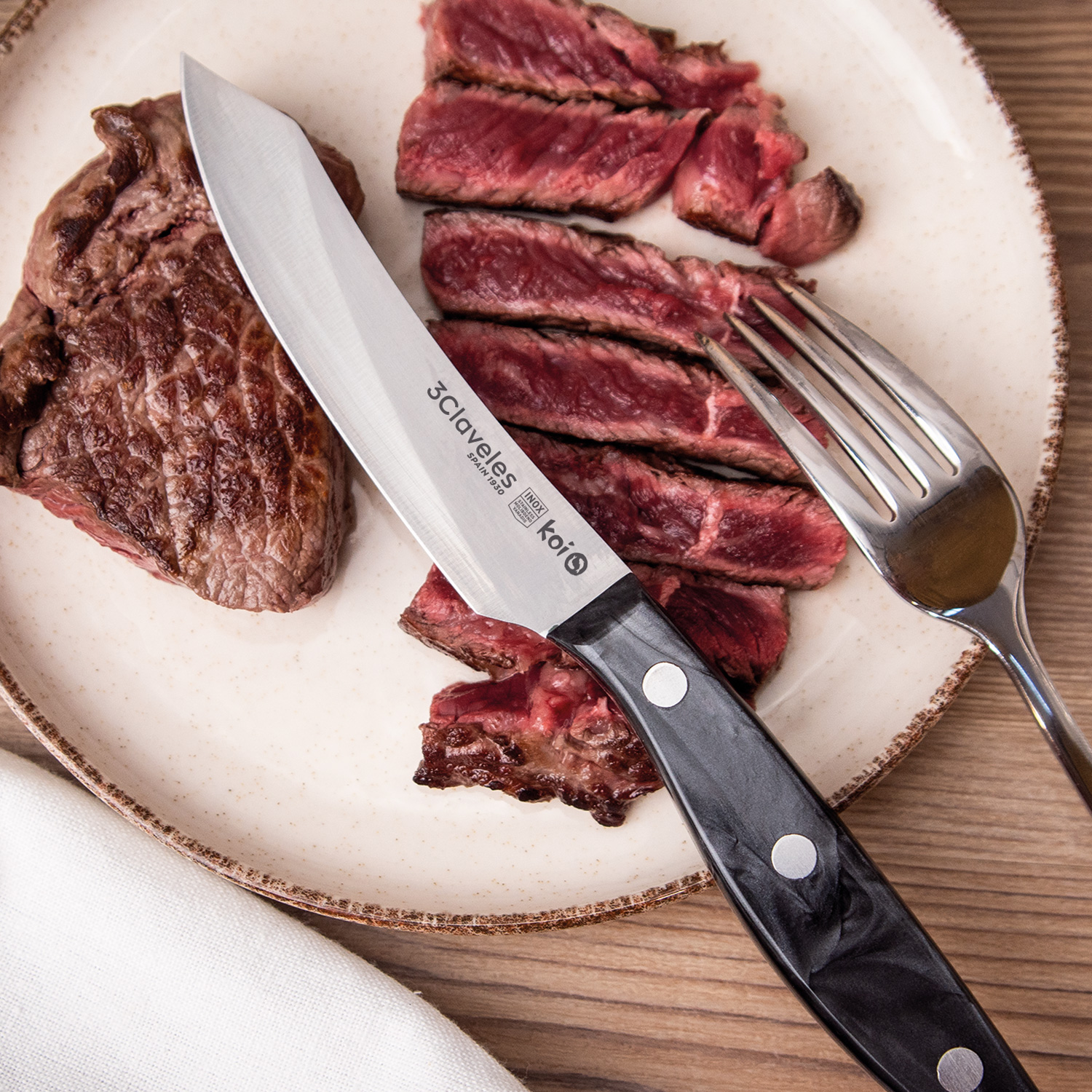
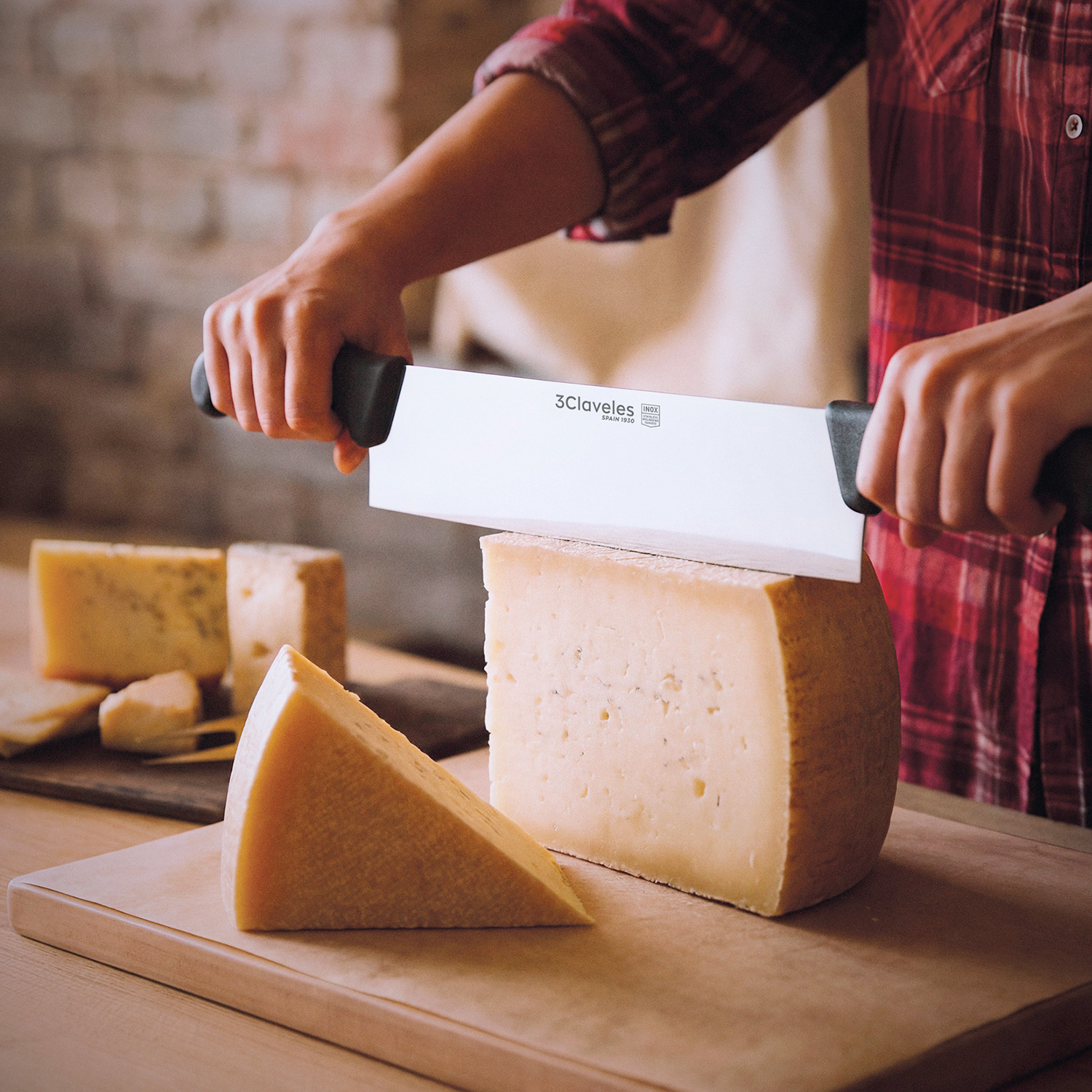
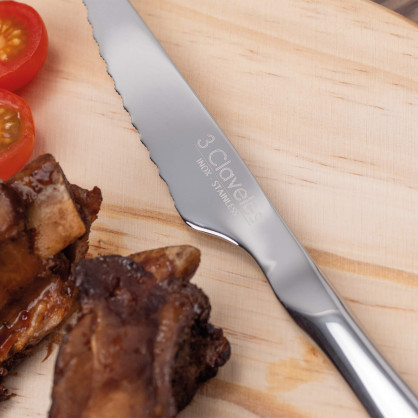
- Finally, tools such as steak knives, table knives, food industry knives, or cleavers allow handling larger pieces or serving meat comfortably at the table.